History of a symbol
The origin of La Catrina
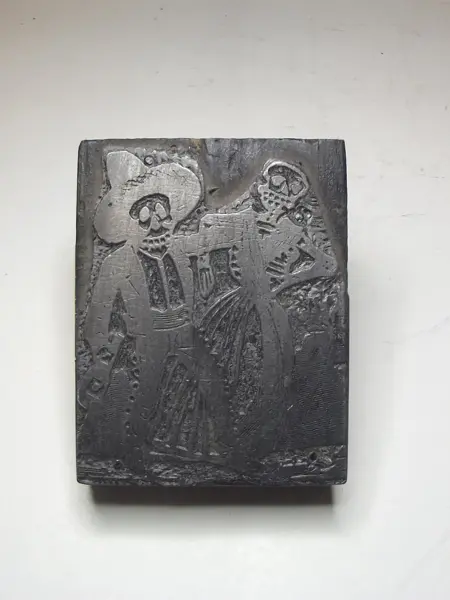
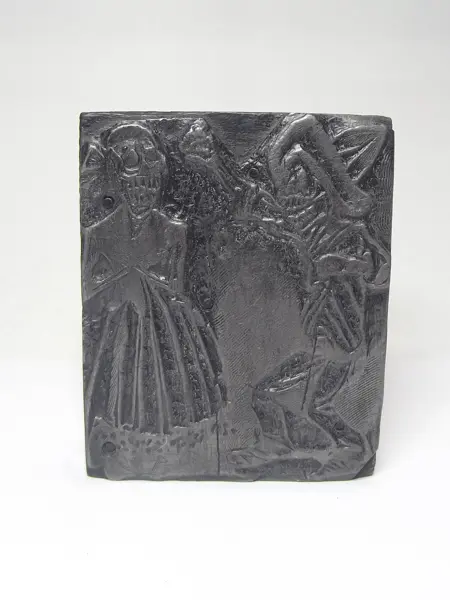
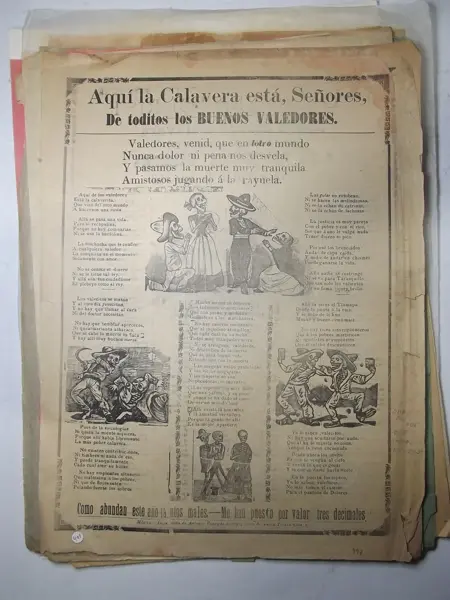
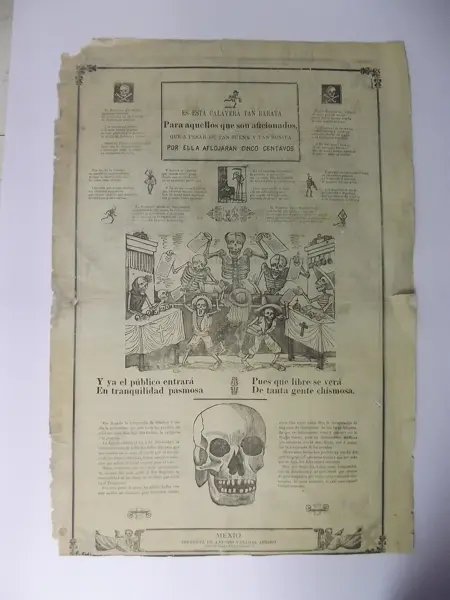
The origin of La Catrina lies in printing, not painting. In the early 20th century, José Guadalupe Posada engraved for Antonio Vanegas Arroyo's publishing house a female skull with a feathered hat that was published as the Calavera Garbancera.
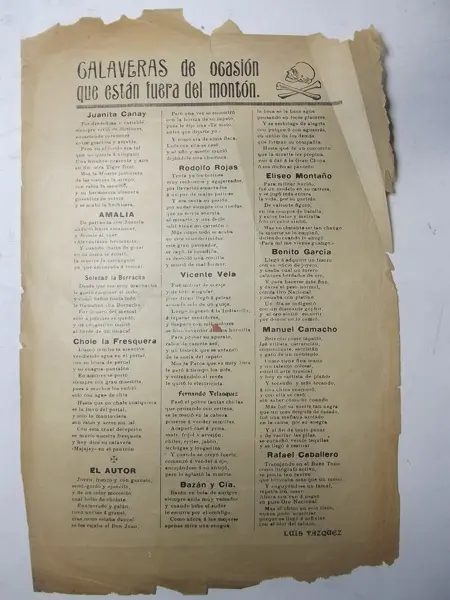
Posada inherited a tradition: since the 19th century newspapers and broadsides had used calaveras to criticize politicians and customs. His contribution was to give them a graphic form so clear and so Mexican that it became unmistakable.
Decades later, in 1947, Diego Rivera took up the figure, gave her a body, a dress and a stole, and called her Catrina, as elegant people were called. Since then she has become one of the most recognized symbols of the Day of the Dead.
To understand La Catrina you have to see Posada's calaveras in their original context: metal plates and cheap prints made for the street, like the ones held by the MUNAG.